My name is Tawny Brianna Turner — probably the only tawny you might ever come across. As seen in the photo above taken at my grandparents home, I come from a small border town in the valley of Texas called Brownsville, where I spent the first twelve years of my life. There’s never a dull moment whether it be Christmas feast failures or my younger cousin and my grandma keeping the whole house awake with their tumultuous laughter in the late hours of the night as they make jokes about each other. You know what they say—you don’t get to choose your family you just get stuck with them, but I’d say God picked the perfect pact when he put my family together.
Now 5 years later, I sit in my AP English IV class officially halfway through my senior year of high school—WOW! It still hasn’t officially sank in or maybe I don’t want it to sink in. I greatly look forward to the independence and abundance of choices that I will get to make to determine what I want my future to look like. On the other hand, what comes with that is the two words I as a teenager hate the most, “ADULTING” and “RESPONSIBILITIES”, but that’s a topic for a later post.
In these upcoming blogs I plan to be critically analyzing the novel, The Secret Life of Bees, by Sue Monk Kidd in different ways. Some of these ways will include: poetry reflection, symbol/motif reflection, and non-fiction synthesis reflection that all relate to this novel. As well as a few other in depth dissections of the authors writing choices to reveal the secrets within Kidds’ award winning, coming of age novel.
Kidd, Sue Monk. The Secret Life of Bees. Penguin Books, 2013.
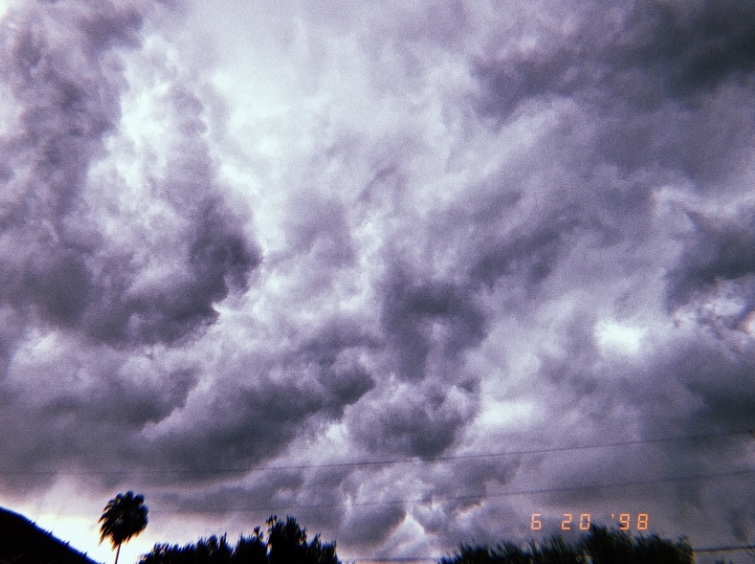
Have you ever been out on a sunny day with not a cloud in sight or even a slight percentage of rain on your weather app? Then next thing you know a few clouds roll in a there’s a slight drizzle, but before you know it your driving in a torrential downpour. Well, believe it or not or emotions can act the same way. One minute you’re trapped around your own walls you’ve built around your emotions, the most sensitive parts of your being, determined not to let anyone in and see your most authentic emotions that can leave you vulnerable. Next thing you know you can’t seem to pick up the bricks to rebuild that wall and everything that was anxiously awaiting to be released comes tumbling out.
In Sue Monk Kidds’ novel, The Secret Life of Bees, the setting is directly connected to the narrators’ inner emotions. Selective description of nature serve as Kidds’ primary tool in depicting the narrator’s flood of emotions as they relate to her surrounding setting when she breaks down her own walls to discuss a topic she’d never fully known how to face. Readers are thoughtlessly immersed into the story of the characters as they begin to feel an emotional connection that relates to their own lives despite it being from a fiction novel.
WARNING: NOVEL SPOILERS BELOW ! ! !
Fourteen year old, Lily Owens, found herself overwhelmed with the memory of her late mother and has had to carry it around with her for most of her life. On the night she finally decides to let someone in, she sits down with her newest friend, August Boatwright, who works at a twenty-eight acre bee farm she inherited along with her sisters May and June. August babysat Lily’s mother, Deborah Fontanel Owens, as she was growing up and had the answers to most questions Lily wondered about her mother. The author uses selective detail in illustrating Lily’s surrounding environment to describe her distraught feelings.
“The sky was split by a zigzagged path of lightning…”(Kidd 252). Kidds’ choice to describe the sky as “split” and “zigzagged” gives readers insight to Lily’s disturbed mind as she contemplates whether or not her birth was an unwanted misfortune for her mother.
“[Lily] My mother had been looking for love, and instead she’d found T. Ray and the farm, and then me, and I had not been enough for her”(Kidd 252).
“[August] Depressed people do things they wouldn’t ordinarily do.
[Lily] Like what abandon their children? I couldn’t stop. The rain spattered my sandals, dripped between my toes”(Kidd 253).
In the author’s description of the rain water getting in small crevices, like between her toes, Lily’s inner mind battle is alluded to. Whether she likes it or not, all the possible answers to the questions she’s never know the answer to are seeping through to the innermost parts of her mind and heart. Internally Lily has always had this struggle but has found ways to keep it hidden from the surface, but after she opened up the floodgates the thoughts she always had inside poured out.
On multiple occasions, I’ve found myself building this invisible walls and bottling things up from those closest to me. I’ll never forget my father comparing emotions to soda in a bottle, he explained to me how you can only shake a bottle of soda for so long before it explodes, and after a while the same will happen to a person with their thoughts and emotions they hold in and mask as being nothing for a long time. We are all trying to survive in this crazy world and no one is perfect, So take the time to let yourself truly feel what your going through and confide in those closest to you.
Because hey, a little rain never hurt anyone, but hurricanes can have disastrous outcomes.
Citations
Kidd, Sue Monk. The Secret Life of Bees. Penguin Books, 2013.
When it really comes down to it, everyone has their own way of dealing with life. How do you cope with life’s challenges? Do you keep to yourself and quietly fight your own battles, do you disclose things to those closest to you, do you find strength in the embrace and trust of God, or do you just put on a false mask to hide the hardships you’re facing in hopes they’ll just go away? The Secret Life of Bees, by Sue Monk Kidd, gives us insight into the lives of two different characters who have their own ways of coping, Lily Ownes and May Boatwright. Both these characters are the inverse of each other when it comes to their way of confronting various challenges brought on by life. As readers follow their story and see the outcomes of their decisions, they’re able to personally choose how to react to tribulations of life after seeing the two majorly different outcomes.
WARNING: NOVEL SPOILERS BELOW ! ! !
Let’s dive into Lily’s side of the story first.
After Lily confesses to August about her life of lies she’d been living ever since she moved into the honey house, August gives Lily and readers an insight into her realistic and forgiving view of the world when she explained that, “There is nothing perfect…only life”(Kidd 256). August has come to have full recognition that life is filled with just has many hard times as good times, if not more. Knowing this about life, August chooses to approach things in a very sensible and calm manner, and ends up passing on this view to Lily. Lily goes on to explain to August that she carries around an exceedingly large amount of baggage concerning her mother’s death…(and how could someone avoid this sort of regret if they picked up a loaded gun and accidentally shot the bullet that ended their own mothers life at only four years old…) August’s own words chime in Lily’s ears as she recalls her saying, “Regrets don’t help anything…”(Kidd 280). Because of August’s words of encouragement like these, Lily began to have a new point of view on things; she learned that it’s okay not to be okay and to need someone to simply understand.
“[Lily] I decided…I preferred someone to understand my situation, even though she was helpless to fix it…’(Kidd 258). She learned how to accept all the good and bad aspects of life, “[Lily] I thought…How you just have to close your eyes and breathe out and let the puzzle of the human heart be what it is”(Kidd 285).
Most importantly she learned that her strength was always inside of her she just needed to find it, “[August]…when you start pulling back into doubt…she’s the one inside saying, ‘Get up from there and live like the glorious girl you are”(Kidd 289).
Contrary to this point of view is May Boatwrights, who has a very distressed view of things and dwells on the hardships of life to an unhealthy extent. May is the insight of an individual’s approach to life who chooses to box in all their emotions for themselves and abide in the never ending difficulties that come with life. After a very close family friend of theirs, Zach, was put in jail for being falsely accused of hitting another man with a bottle, everyone does their best to withhold this information from May due to fear of how she would react. Despite these attempts, May finds out and takes it harder than anything she had before. Rather than discussing her innermost feelings with those around her, she decided to go to what she called her “Wailing Wall”, where she wrote down things that saddened her and stuck them in the wall to make her feel better. Instead she journeyed into the woods, and they ended up finding her dead in the river after she committed suicide.
May goes on to explain in her suicide note that, “[May] I’m tired of carrying around the weight of the world”(Kidd 210). But could that feeling have been avoided? May was surrounded by open arms ready to hold her as well as hearts and minds ready to share the burden of her thoughts and feelings. Why did she never choose to confide in other like Lily did? What if she had, would she have been able to survive?
We were never designed to live this life alone. I believe that God knew the sufferings that this life contains and because of that we are given family and friends to rely on when the going gets tough. It’s okay to not always be in a state of adequacy. It’s okay to allow your thoughts and feelings meet the ears of others. It’s all okay. After writing this I, myself, feel the need to re evaluate the manner in which I cope with the burdens of life. So take a breath and ask yourself the next time you find yourself in the face of adversity, how do I handle things? What’s the healthiest and best way for me to get through this and what can I do to achieve that?
We are ALL on different paths in life, but we are ALL still facing something (cliche I know, but it is as true as it gets)
Citations
Kidd, Sue Monk. The Secret Life of Bees. Penguin Books, 2013.
“I worried so much about how I looked and whether I was doing things right, I felt half the time I was impersonating a girl instead of really being one.”
Originating in the 14th & 15th century in Europe, masquerade balls were simply a way for people to mask their true identities and lives for a night. But what happens when this masking lasts a lifetime? I think it’s important that we come to the realization that these, one night masquerade ball antics, are becoming real world problems where people don’t just get to take off their masks in the morning. Where this issue lies most prominently can be seen during the post civil war period. In Paul Laurence Dunbar’s poem, “We Wear the Mask”, Dunbar highlights the oppression of the identities of African Americans and how they had no other choice but to accept it. Truth is, this poem goes far beyond the civil war time period, because this poem holds universal truths that we still see in our world today. In 2001, Sue Monk Kidd published her novel, The Secret Life of Bees, which also incorporates characters that touches base with these issues.
Let’s break each one down a bit to help reveal these similarities.
Throughout “We Wear the Mask”, Dunbar uses the extended metaphor of a “mask” to describe the hidden inner battle African Americans fought silently while being persecuted and mistreated without being able to claim their own identity and fight back. “We wear the mask… with torn and bleeding hearts we smile…”, explains Dunbar. This mask that people, such as African Americans, had to wear was a fake facade of an artificial happiness. Beneath that lies the true feelings that society pretends to be oblivious to. Dunbar uses the rhetorical question, “Why should the world be over-wise, In counting all our tears and sighs?” This question portrays the irony of the situation because if people truly considered the wrongness of the inhuman treatment of African Americans in this time period they would do away with these injustices.
WARNING: NOVEL SPOILERS BELOW ! ! !
Now let’s talk about The Secret Life of Bees.
A little background disclaimer:This novel was set in 1964, right at the time when the Civil Rights Act was passed which was enacted to ban segregation in most public setting on the basis of race, sex, religion, and nationality.
Okay, that being said, despite the passing of the Civil Rights Act, mistreatment towards minority groups still remained prominent. In the novel one of the main characters, Rosaleen, is the caretaker of Lily, the fourteen year old protagonist and narrator of the story. The close relationships Lily had to other colored women made many people uneasy.
“[Police] There’s colored people here. You understand what I’m saying?… it’s not natural, that you shouldn’t be…lowering yourself”(Kidd 198).
Mistreatment towards colored people in the novel can also be seen when some men began to speak in a derogatory way toward Rosaleen, as she attempts to register to vote. After being instigated Rosaleen chooses to fight back by spitting on their shoes and refused to apologize. Once the police arrive not only do they arrest Rosaleen but they beat her. Why is this still happening? The Civil Rights Act was just passed therefore the problems seen by Dunbar, in the post civil war age, should be gone right? This type of stereotyping of a certain group of people didn’t just affect African Americans it stretched out to other groups of people.
Even Lily felt categorized into a group apart from other girls her age, the group that lacked mothers that left her feeling inferior and ashamed. “You can tell which girls lack mothers by the look of their hair”(Kidd 3).
Hopefully now the connection between this poem written in 1895 and novel set in 1964 are more transparent. “We Wear the Mask”, holds broader concepts about certain stigmas that lie within different minority groups which are still very relevant in today’s society. This is why despite the time gap between the two works of literature, they both hold similarities of minority groups struggling with shame of their status and having to make the choice to fight back or stand down. This can cause people of all kinds to feel the need to cover up their real identities and eventually even lose themselves after disguising who they truly are for so long.
What are you feeling the need to mask in your life?
Citations
All That’s Interesting. “The Glamorous And Gruesome History Of The Masquerade Ball.” All That’s Interesting, All That’s Interesting, 17 Nov. 2017, allthatsinteresting.com/masquerade-ball-history.
The holder of our knowledge, thoughts, and memories. The mind travels with us along this river called life collecting everything along the way, and once the mind has grasped knowledge of something there is no undoing it. Ignorance can truly be bliss for some people since there are days in everyone’s life where the mind acts more like a battlefield. Where a person’s thoughts, which are conjured up by the mind, fights with the realities a person sees. Or where the truths someone thought they wanted to know but can never forget lies. These thoughts and voices can begin to carry so much weight that they affect the person’s outlook on life and the way they treat people around them. The struggle to silence the voices of a person’s thoughts is a battle only that individual can fight and most of the time it can become a day to day struggle.
In Sue Monk Kidds’ novel, The Secret Life of Bees the main character, Lily Owens found herself far from home in search of the truth of her mother’s life and death. In hopes of relinquishing her own baggage of thoughts concerning her mother that she’s had to carry. Kidd incorporates figurative language and internal dialogue to breakdown the complex internal emotions that Lily began to hold towards her mother.
WARNING: NOVEL SPOILERS BELOW ! ! !
As Lily grew up she held any memory of her mother very dear and close to her heart. The image Lily had about her mother was confusing, since at times she questioned whether or not her mother truly wanted her after her marriage with her father, T Ray, had turned out to be so bad. Lily also had to deal with the memory of the day, when she was only four years old, and accidentally pulled the trigger on the gun that took her mother’s life. Nevertheless, Lily loved and admired her mother dearly, and she tried to keep her thoughts concerning her mother in a positive light. Still at times, Lily’s couldn’t think about her mother without her mind drifting into a dark place that held the thoughts which left her with uneasy feelings in regard to her mother.
“[Lily] This is what I know about myself. She was all I wanted. And I took her away”(Kidd 8).
Kidd uses the metaphor of the mind having a “steel plate” inside of it that can hold back certain thoughts that someone doesn’t want to think of. Lily had a stubborn attitude that aligns with this, “steel plate“, comparison when it came to thinking of her mother because she knew the overwhelming amount of negative thoughts that came with it. Kidd uses another metaphor to describe the mind containing “elevator doors”and, contrary to the “steel plate“, these are what enable thoughts to venture into the mind.
This was the battle Lily was fighting when she attempted to think about her mother.
All she wanted to think about was her mother but now her conflicting thoughts and emotions about her mother were overtaking her, and she didn’t know whether or not to let her mother on the elevator of her mind. Kidd uses these metaphors to better portray to readers the inner feelings Lily was having that we can all relate to.
“[Lily] Let me on, my mother was saying. Let me on the damn elevator”(Kidd 171).
Kidd also incorporated the use of internal dialogue between Lily’s conflicting emotions in regards to her mother in order for readers to have a deeper insight of Lily’s mental state. Lily is seen going back and forth in her own mind between thinking about her mother which could come with a cost of unwrapping the truth of things she may not be able to handle, or blocking these thoughts out and continuing on with her life completely oblivious to these wrapped up truths.
“[Lily]… and I told myself I could think about anything I wanted, except my mother, so naturally she was the only thing that wanted on the elevator…. Let me on, my mother was saying”(Kidd 170-171).
“[Lily] Well, fine. I pulled out my bag and examined my mother’s picture… Pulling on her gloves, I noticed how tight they fit all of a sudden… By the time I was sixteen… My palms would split the seams of the gloves, and I would never wear them again”(Kidd 171).
“[Lily] No, I breathed… A scared whisper. No, I will not think about this. I will not feel this”(Kidd 171).
This toggle in Lily’s mind comes from her fear of the image she’s always had of her mother being altered after she learns the truth about things. Once you know the truth there is no going back. This inner dialogue gives the readers a richer insight on the metaphors previously used by Kidd to describe the battle in Lily’s mind.
At the end of it all, the author knew that this metal strife Lily was facing is something we all as humans encounter. I could go on and on about the struggles I, myself, face day after day when it comes to the thoughts and ideas my mind comes up with. It’s almost as if my mind never has an attitude of, “Hey, I know you’ve had a long day, let me conjure up some positive thoughts that will boost your self-esteem and help you be at peace with all that’s happened today.” Instead it’s more like, “Hey, I know you’ve had a long day, so lets get some thoughts going that’ll make you question every last thing that happened today, and create some scenarios in your head of things that probably aren’t happening but will make your worry meter spike!” We all have to take the bad with the good in this life, and that’s an example of the bad we have to deal with everyday, the negative aspects of the mind.
Learn to combat the bad thoughts with good thoughts and take the time to pray everyday for strength and guidance. Spread love and positivity because you never know what kind of mental battle someone is really facing.
Citations
Kidd, Sue Monk. The Secret Life of Bees. Penguin Books, 2013.
Nowadays it seems as though feminism is at an all time high and stronger than ever, but the unity of women to stand up and fight for a common goal is nothing new. Dating all the way back to 1848 for the women’s suffrage movement, the equal pay act in 1963, the fight for abortion rights in the roe v. wade case in 1973, and more recently the #metoo movement that began in 2006 and is still prominent today.
Feminism is a huge leading role in Sue Monk Kidd’s novel, The Secret Life of Bees which is set in 1965. Kidd highlights the leading meaning of her novel by using and challenging the roles of females. The women in this novel challenge the common day stereotypical idea that females are to have a male in their life preceding the role of dominance for the females. Independent from a male, each female in this novel has some sort of influence on the other that helps them overcome their battles together.
WARNING: NOVEL SPOILERS BELOW ! ! !
When looking at The Secret Life of Bees from a feminist approach, it is easily percieved that all the female characters have grown into a lifestyle that is better off without male dominancy. We first see this in the novel with the main character, Lily, who lives with her father, T. Ray, and caretaker, Rosaleen, after Lily’s mother died. After the passing of Lily’s mother it was quite apparent how the role Lily’s father had in her life was only causing her more harm than good. As Lily continued to grow up a void where she lacked a mother grew in Lily’s heart, and always left her longing for something to “complete” her.
“… my whole life had been nothing but a whole where my mother should have been…”
As a result of this Lily grew into great insecurity and low self-esteem and always felt as though she was different or insufficient because she had no feminine guidance or encouragement.
“[Lily] You can tell which girls lack mothers by the look of their hair.”
Once Lily made her way to Tiburon, South Carolina and met August, June, and May Boatwright she began to flourish and thrive like never before. A common stigmatism about female’s is that they need a male figure in order to keep hold of the reins that control a female’s life and that they would rather sit back and let the male figure provide all the support. Kidd demonstrates a point of view that challenges this idea with the ring of feminine support that surrounded Lily and acted as the catapult for Lily to begin living her best life that she was not going to recieve from a male role.
“… he [T. Ray] was saying, Oh Lily, you’re better off there in that house of colored women. You never would’ve flowered with me like you will with them”(Kidd 300).
Upon the entrance of these three new female figures in Lily’s life, the introduction of the metaphorical figure, black mary of guidance and strength, serves as a catalyst that change of self-perception that Lily needed.
“[August] Our Lady is not some magical being… she’s something inside of you.”
The extensive amount of maturing that Lily had to do at such a young age caused growth in her strength and confidence to be stunted. Most children in Lily’s age group never had to face the things she went through at her age, but the truth that she couldn’t see for most of her life, was that she always had this strength inside of her, she just needed to have confidence in her own qualities.
“[August] You have to find a mother inside yourself.”
The female empowerment Lily came into allowed for her truest inner personality, that didn’t get the chance to fully thrive after her mother’s passing, to be unlocked. This authentic makeup of Lily’s consisted of life changing courage, an anchored faith, and an unexplainable amount of love for all those around her. Lily’s life had always been defined by her mother’s death and her personal growth was a reflection of that. After her connection to female figures in her life she was finally able to see herself in a new light. When reviewing this from a feminist approach the authors running motive throughout the novel is revealed. Throughout The Secret Life of Bees Kidd plays on the importance of female empowerment between women to show the life changing effects that can come as a result, as seen through the main character Lily.
Citations
Kidd, Sue Monk. The Secret Life of Bees. Penguin Books, 2013.
I can definitely say this is the most blogging I’ve ever done in my life (considering the fact that I’ve never exactly blogged before). This experience has helped strengthen my writing skills and has given me a new point of view on writing. Blogging is an interesting type of writing that falls under a category of writing I find more enjoyable. I prefer a “journalism” style of writing where I can add my own personality and voice into the topic that is being discussed. As opposed to strict writing where you have a topic that has to be professionally written about with exact, proper grammar.
I used to DREAD writing. Just the thought of having to write a simple three paragraph essay sent me off into panic mode. Looking back the only reason why I feared it so much was because I didn’t do it enough to be comfortable with it. After my Junior year, I did so much writing that eventually I was actually enjoying it and no longer overthinking everything. The feeling I get when I complete a piece of writing (especially a blog with seven entries containing over 500 words each) is such a fulfilling feeling.
Now, in my Senior year at Belton High School, I can say that I have developed a love for writing that I hope to pursue in some way in college. Writing has had a way of helping me to release my inner thoughts and emotions that I had a hard time getting out. I began to see my writing connect to things in my own personal life and it helped me to better understand myself and situations I was in. I would definitely recommend to anyone who loves writing or to anyone who was like I was, afraid to write or even slightly immerse themself into any sort of writing, to try blogging. Pick a subject or novel and write different topics that can be connected with that subject or novel you’ve chosen. The accomplishing feeling that comes at the end will be worth it and you might be surprised at the things you end writing about and how they reflect your own life.
Anyway let’s wrap things up on the novel this whole blog was about, The Secret Life of Bees by Sue Monk Kidd. After looking at several other novel choices, I ended up choosing this novel in an independent novel assignment. We had about five minutes to read the first couple paragraphs of the books at our table to then decide which interested us the most. I stuck closely to The Secret Life of Bees because I felt that my own life experiences related most to this novel. I would 100 out of 10 recommend this book to anyone who is looking for a novel that will keep you at the edge of your seat the whole time…(and might even make you shed a few tears). Kidd’s novel encourages us all to search deep within ourselves to find the strength that we all possess in order to stand tall and strong in the face of hard times and adversity. Kidd also challenges the idea of “blood being thicker than water” by showing how relationships formed throughout your life that aren’t by “blood” can be more powerful than those relationships destined by family blood. After four years of reading MANY books throughout my Pre AP and AP English classes I read this book at the ABSOLUTELY PERFECT time, since I am fixing to go out into the world and face brand new experiences. The Secret Life of Bees has helped me (and can help all those who choose to read it) realize that even on our darkest days we all have a hidden gift called strength that is greater than give ourselves credit for, and is meant to help get us through life’s difficulties. The second greatest gift revealed to us in this novel, are all that people that life awards to us during these times to help us fight these battles. The Secret Life of Bees is a beautiful piece of literature, that is not only enjoyable but filled with life lessons to teach many generations to come.
Citations
Kidd, Sue Monk. The Secret Life of Bees. Penguin Books, 2013.






 The Secrets Within